Background
Jamaica’s creative industry, particularly photography and visual media operates within a visibility economy that rewards proximity to a very specific ideal.
Kingston over everywhere else.
Lighter skin over darker skin. Eurocentric beauty standards over indigenous ones. Expensive equipment as a proxy for legitimacy. The beach, the night life, the villas, the carefree always outside aesthetic of aspirational social media over the actual texture of everyday Jamaican life.
Creators who exist within that world are not to blame for it. Many have never had a reason to question the current they were born into and learnt to swim with. But the current itself was shaped by something, decades of colonial and capitalistic value systems never fully dismantled, conditioning a market to engage with content that reflects the life they have been taught to want rather than the life we actually live.
This is not an accusation, it is an observation about a structure; and it is the foundation on which AVCE was built.
AN Introduction
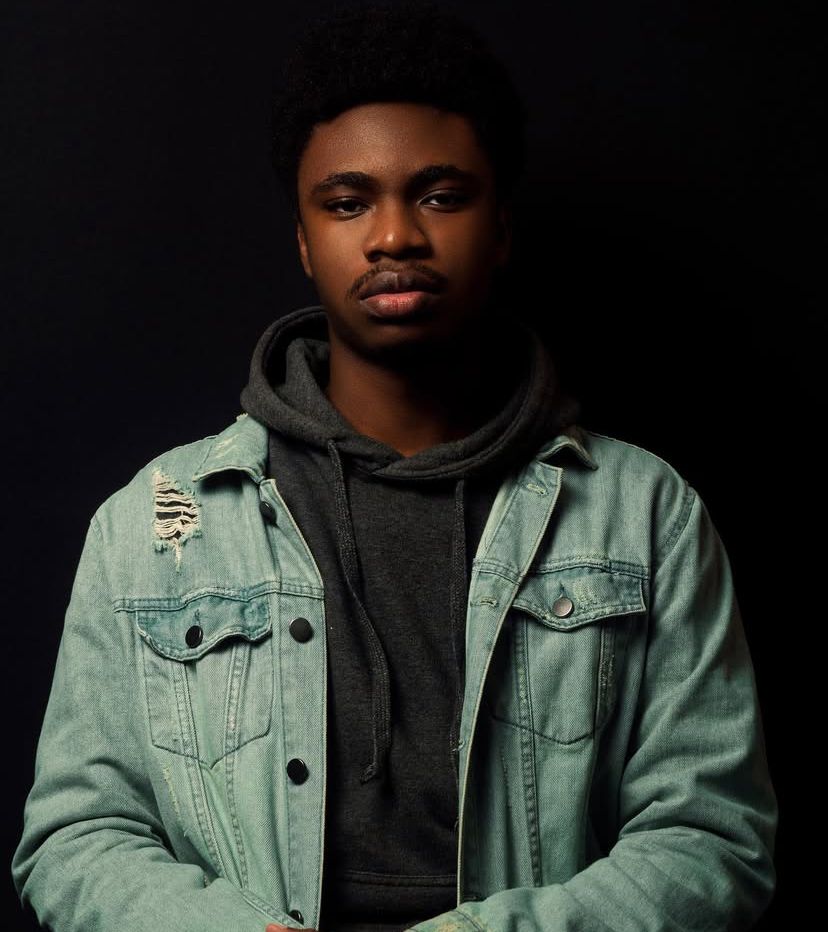
My name is Tajé, I’m a photographer, audio engineer, musician and educator based in Manchester, Jamaica. Not Kingston, and unfortunately that distinction matters more than it should.
I came up through the creative industry the way many people outside of the capital do. Through hard work, limited opportunity, and the persistent experience of being quietly passed over in spaces that invited me in with one hand, but redirected opportunity with the other.
The observation
I worked on productions where my creative contributions were used without credit, replaced without explanation, or simply never aired. Decisions were made in silence. No confrontation, no feedback, just erasure by omission.
I couldn’t do anything about it because the social capital required to demand accountability was the same social capital that had been withheld from me in the first place.
What I observed across these experiences was consistent. The work was never the deciding factor. The deciding factor was always who you were in relation to the people making the choices. Your parish. Your connections. Your equipment. Your brand. The demographics of your subjects. Whether your aesthetic reflected the aspirational world the industry had agreed to amplify.
I was good at what I did. I knew it. The people around me knew it, but that did not matter.
At some point, I had to decide what to do with that knowledge. I could have tried to assimilate, to reposition myself toward the aesthetic and the circles that the industry rewarded. I could have stayed in Kingston, photographed the “right” people, switched camera brands, praise the industry.
I chose differently.
AVCE, Audio and Visuals for Creative Esoterics, was built from that choice. The name is deliberate. Esoterics are not the mainstream. They are the ones who exist outside the dominant framework, whose work does not fit the visible mould, whose contributions tend to be overlooked precisely because they are not reflecting the world back at itself in the way the market expects.




AVCE exists for those people. And it exists to produce work that those people deserve.
In practice, that means portraiture that photographs people as they are, without excessive retouching, without chasing a beauty standard that was never built for most of the people I photograph.
It means documentary work that engages with real social and political realities, resilience in the face of disaster, the lives of ordinary Jamaicans outside of the aspirational frame.
It means audio production approached with the same seriousness as the visual work, because sound is not a secondary medium.
It means working with schools and independent creators and communities that the industry largely ignores. And it means teaching, transferring these skills to young people in and from Manchester who would otherwise have no access to them, because the cycle of exclusion begins early and is most effectively interrupted at the beginning.

I will be honest AVCE was created from a place of frustration. But that frustration is not the same as bitterness and the distinction matters. Bitterness looks backward, I want this to look forward.
The Jamaican creative industry, like the society it operates within, is not going to restructure itself. The classism, the colourism, the geography of opportunity, these are not problems that will be solved by individual good faith. They are structural. The response to a structural problem is to build a different structure.
That’s what AVCE is. A different structure. One built around the belief that the most meaningful creative work does not come from proximity to power, access or assimilation. It comes from honesty, from competence, from the deliberate decision to see people clearly and document the world as it actually is.
Create what matters. That is not just a tagline. It is the entire argument.
